

*Part 2 | Field of Dreams*
As we continue the story of the South African Women’s U15 team in Uganda, the focus now shifts from arrival and first impressions to something deeper — the bond between players and management, and how that unity quietly became the foundation of the tour.
The South African Women’s U15 side had travelled to Uganda to take part in the Africa Rising Stars Friendly Series, with matches played at the National Friendship Stadium. In Part 1, we introduced the setting, the early moments, and the field that South African Baseball would later formally note as the “Field of Dreams”. In Part 2, we now begin to unpack what truly made this tour work.
The story continues — but in many ways, it is only just getting started.
While the young women were settling into their new surroundings and being made to feel welcome and safe almost immediately, the coaching and management staff were carrying a very different weight. It’s unlikely they would ever admit it, but the reality is that they had taken on a significant challenge.
Their responsibility went far beyond the game itself. They were entrusted with player wellbeing on and off the field, tasked with creating an experience that would last a lifetime, and still expected to deliver competitive performances for Team South Africa. All of this came with pressure — even while fully understanding that, at this age group, high performance is not the primary objective. Long-term player development always comes first.
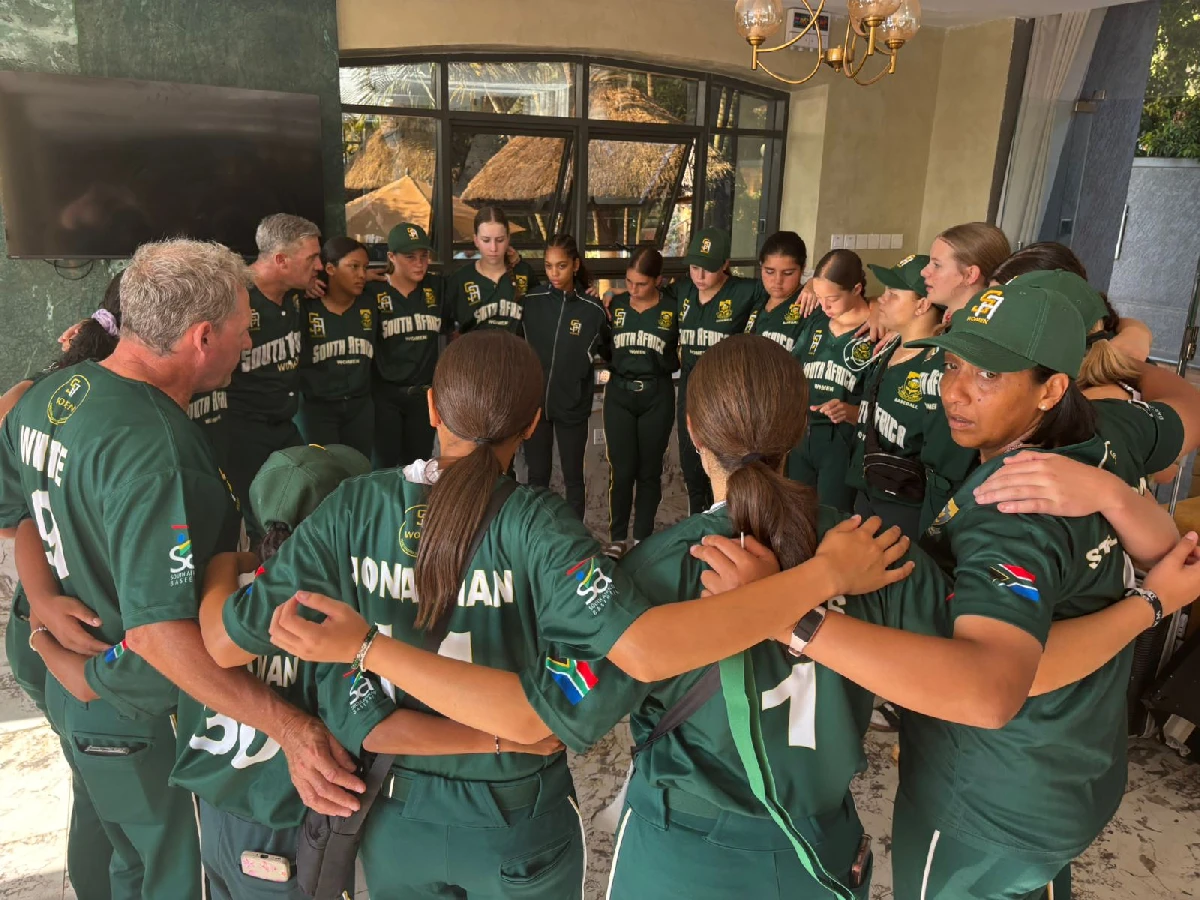
So when we speak about bonding, it’s important to understand what that really means. It wasn’t only the players who bonded across provincial and international boundaries — the management team did too, even if they didn’t realise it at the time. That unity quietly filtered through the squad, creating trust, stability and confidence between players and those guiding them.
For the management team, who had been spread across South Africa in the long build-up to the tour, this moment had been months in the making. They had quietly waited their turn to travel while carrying the workload behind the scenes — countless online meetings, apparel changes, travel arrangements, organising practice sessions, navigating South African Baseball policies around safeguarding and codes of conduct, monitoring player movement, all while balancing day jobs and family responsibilities of their own, and always whilst under scrutiny from outside. Management had to galvanize themselves against many challenges, not only on field, but also against the fact that the process of bringing a team together was quite often a thankless job.
Very quickly, the tour became real.
When the team arrived in Uganda, they were welcomed by a massive downpour of rain. The heavy weather delayed field preparations and meant that tournament officials were unable to meet the team at the hotel for the planned pre-tournament meeting. Faced with circumstances beyond their control, the South African coaching staff had to make the difficult decision to cancel the first training session.
Once the rain finally eased, a decision was made to take the entire team to the field anyway — not to train, but to visualise where they would soon be playing. That decision turned into a powerful and unforgettable moment, allowing the players to connect emotionally with the space before a single ball had been thrown.
Shortly after landing, the reality set in that the bonds had to work — immediately. It was all hands on deck to ensure the team had a successful tour. Little did the management know at the time that their role would stretch even further, extending into field preparation and supporting match officials, rules and regulations to ensure games could take place smoothly.
From the drive alone, the girls’ eyes were wide open. They took in everything around them — Ugandans riding boda bodas, taxis stopping in the middle of the road, traffic flowing without robots, political posters lining the streets, and even a small political rally unfolding along the way. It was a genuine eye-opener, offering a glimpse into everyday life in Uganda and a world very different from home.
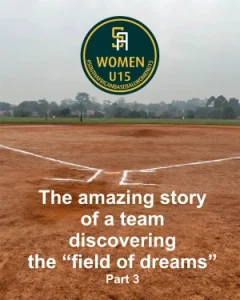
As the bus turned off the main road, the tar suddenly gave way to gravel. Passing through a stretch of trees, the baseball field appeared — almost like something out of a dream. In that moment, reality set in for the girls. They realised just how fortunate they are back home in South Africa, with well-resourced clubs and multiple fields, while here a single field serves so many.
And yet, when they finally saw the field, their faces lit up. The excitement was undeniable. You could feel it in the air.
On the morning of the first game, the South African team arrived early. Coaches Jamie Cooper and John White immediately stepped in to assist with field preparation. Before long, it resembled a full-on groundsman workshop, with everyone pitching in, and once again South African Baseball showing that we can lead in Africa through kindness and support, the Uganda team was visibly grateful for the support.
What made the moment even more meaningful was discovering that there was very limited equipment available to prepare and mark the field. Coach Jamie Cooper and Coach John White worked closely with the Ugandan groundsman, demonstrating how to properly measure and mark out the field ahead of the pre-tournament meeting. At the same time, HOD Natalie worked through administration processes, ensuring the team was registered, organised and ready.
Later in this series, we’ll look not only at the success stories of the players, but also those of the management team. In truth, they may only have fully understood the spirit of this group in hindsight. That spirit — the kind dreams are made of — doesn’t happen by chance. And without realising it at the time, management were the very people who made it possible.
This emotional rollercoaster is what makes coaching and managing so demanding, yet so deeply rewarding.
In Part 3, we’ll move fully into the action on the field — where Day One ended level between South Africa and Uganda, and where Day Two would begin to reveal just how powerful unity can be when adversity arrives.